
Purpose of Information Security Risk Management:
Strengthen information security management; ensure the confidentiality, integrity, and availability of information; maintain the reliability of information equipment (including computer hardware, software, and peripherals) and network systems; and raise employees' awareness of information security. Protect these resources from interference, damage, intrusion, and any other harmful acts or attempts.
Information Security Risk Management Organization:
The Information Security Promotion Task Force coordinates, plans, audits, and promotes information security management, serving as a cross-departmental information security body. In the event of significant organizational changes, such as restructuring or major business changes, the applicability of this policy will be reassessed. This policy will be revised as appropriate in accordance with assessment results, relevant laws and regulations, and the latest developments in technology and business to ensure it meets actual needs.
Information Security Promotion Task Force:
The task force comprises the heads of each department, with the General Manager serving as its convener. If a member changes roles, a replacement must be appointed immediately and a handover completed.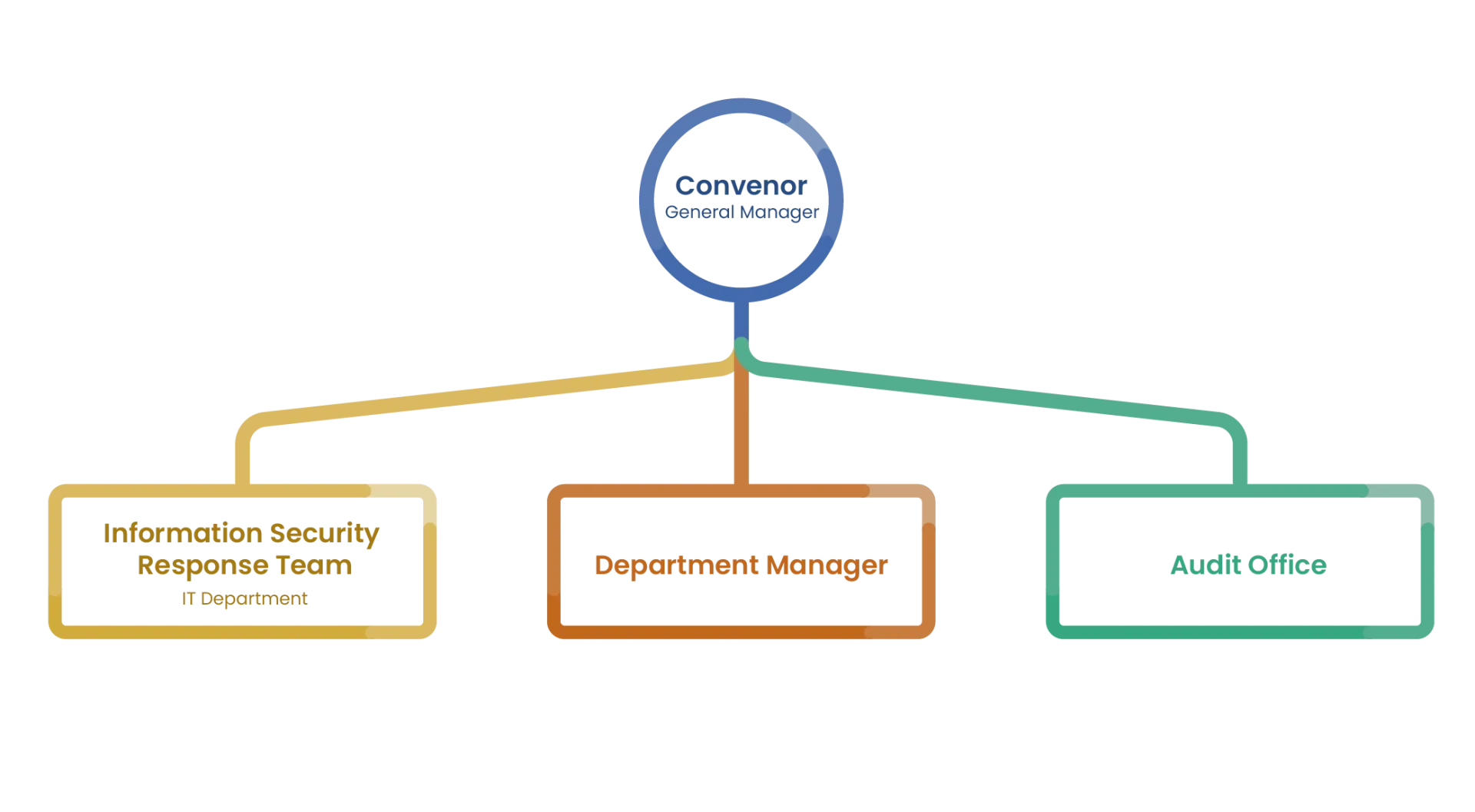
Allocation of Information Security Responsibilities:
The head of the Information Technology Department appoints IT personnel to serve on the Information Security Incident Response Team. The team is responsible for developing, implementing, and evaluating information security guidelines, plans, and technical standards, as well as carrying out information security operations, including preventive measures and incident handling. The Audit Office is responsible for protecting confidential information and conducting security audits.
Information Security Protection and Control Measures:
Based on the National Institute of Standards and Technology (NIST) Cybersecurity Framework (CSF), the company safeguards information security through six steps: Identify, Protect, Detect, Respond, Recover, and Train.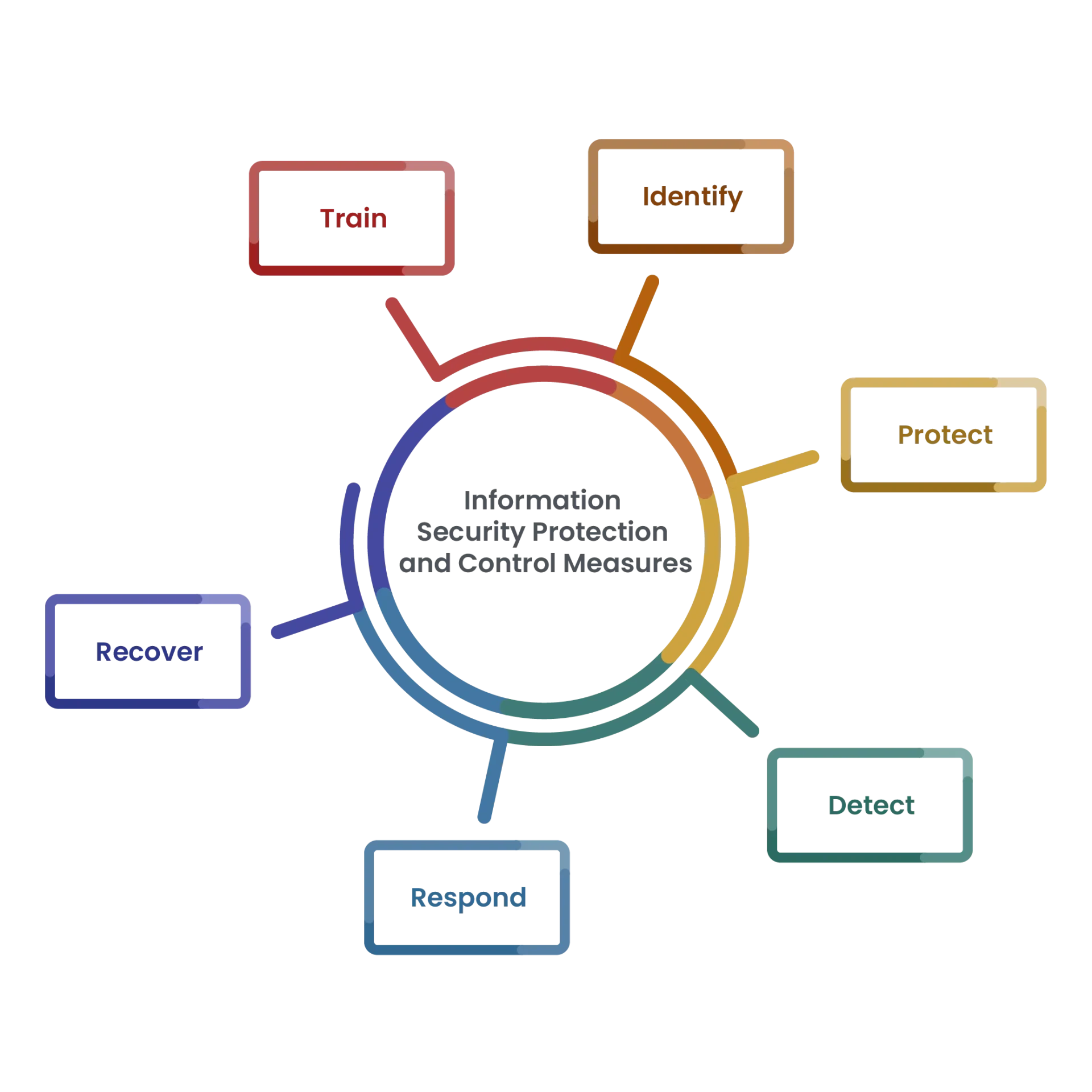 Step 1 — Identify: Understand the organizational environment, critical resources, and services; conduct risk assessments and establish risk management strategies aligned with daily operations.
Step 2 — Protect: Plan and implement safeguards to ensure critical resources and services are protected from information security incidents.
Step 3 — Detect: Establish mechanisms for real-time detection and alerts for cybersecurity incidents, and regularly update systems and antivirus definitions.
Step 4 — Respond: Maintain effective internal and external communication channels to manage security incidents, including investigation, digital forensics, and improvement recommendations.
Step 5 — Recover: Develop data backup and recovery plans to restore normal operations as quickly as possible.
Step 6 — Train: Information security is everyone's responsibility. Continuously strengthen employees' information security awareness.
Information Security Implementation Plan:
|
I. Personnel Management and Information Security Training: |
Major Information Security Management Measures Implemented:
| Item | Specific Management Measures |
| Firewall Protection and Control | Firewall connection rules are configured to allow only basic Internet access and email services by default. Special connection requests must be approved by both the department manager and the head of the IT Department before access is enabled. Firewall network connections are monitored continuously. |
| IT Server Room Security Controls | The server room is secured by a locked door and requires a key for entry; unauthorized access is prohibited. An uninterruptible power supply (UPS) keeps equipment powered during an unexpected outage until the building generator starts, allowing IT staff time to take follow-up action. Server room inspection logs record temperature and humidity as well as the status of servers and network equipment. |
| Antivirus Software Controls | The company uses a centralized management server to monitor and manage enterprise endpoint antivirus software. All user computers must have the endpoint antivirus software installed, and virus definitions must be updated regularly to reduce the risk of infection. |
| Email Security Controls | The email server provides active email scanning and threat protection to identify unsafe attachments, phishing messages, spam, and emails containing malicious links before users receive them. After emails reach users' computers, antivirus software also scans for unsafe attachments. The email server retains backup copies of all incoming and outgoing email data. |
| Data Backup Controls | Information system programs and databases are fully backed up daily, with an additional copy stored on a NAS backup server. Files from all departments are stored on a file server and centrally backed up by the IT Department to the NAS backup server. Each week, backup data is copied to portable hard drives and handed to Administration Department personnel for off-site storage. Versioning and access permissions for important documents are managed through the document management system, while servers and data are replicated to separate locations at different factories for disaster recovery. |
Resources Allocated to Information Security Management:
| Item | Specific Resources Allocated |
| Information Security Protection Investment | As part of its information security threat and risk management solutions, the company enters into annual maintenance and operations agreements with service providers. These cover dedicated network lines, antivirus and anti-hacking protection, and maintenance of various servers, with an annual cost of approximately NT$3,700,000. |
| Internal Training | The IT Department conducts one training session each month. Topics include shutting down all systems during an unexpected power outage; backing up and restoring NAS, ERP, virtual machine, electronic approval, and email server systems; information security case awareness; server-room fire protection drills; antivirus and anti-hacking case awareness; failover to backup networks; replacing failed server hard drives; and switching to backup dedicated network lines. As of December of the current year, a total of 12 internal training sessions have been conducted. |
| External Training | As information and network technologies continue to evolve, IT personnel participate in information and network security seminars and training sessions from time to time to strengthen their security awareness and knowledge. As of December of the current year, they had attended a total of three seminars or training sessions. |
| Information Security Officer | On November 12, 2025, the Board of Directors approved a change in the Information Security Officer, appointing Director Chang Fu-Ming to the position. |